Surely You're Joking, Mr. Feynman!

South of the Border, West of the Sun
Kafka on the Shore
On Grand Strategy
Days at the Morisaki Bookshop
The Great Gatsby
The Goal
A Sport and a Pastime
Stoner
7 Powers
Letters from a Stoic
Crime and Punishment

Nip the Buds, Shoot the Kids
The Unbearable Lightness of Being
The Stranger
East of Eden
Norwegian Wood
What I Talk About When I Talk About Running
Stories of Your Life and Others
Dune Messiah
Siddhartha
Dune
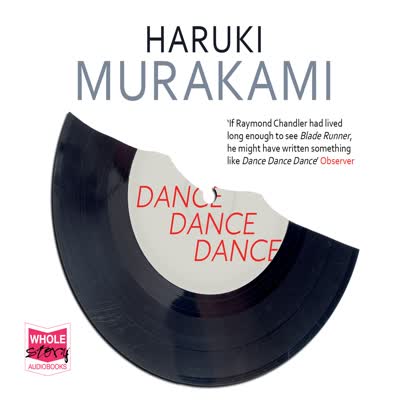
Dance Dance Dance
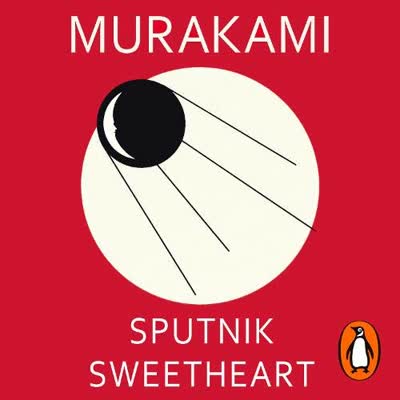
Sputnik Sweetheart
My Notes (15)
“We’re a violent people, Cal. Does it seem strange to you that I include myself? Maybe it’s true that we are all descended from the restless, the nervous, the criminals, the arguers and brawlers, but also the brave and independent and generous. If our ancestors had not been that, they would have stayed in their home plots in the other world and starved over the squeezed-out soil.”
Lee said. "If they pretended sorrow they’d be liars. It doesn’t mean anything to them. Maybe they’ll think of me sometimes—privately. I don’t want them to be sad. I hope I’m not so small-souled as to take satisfaction in being missed."
"I know that sometimes a lie is used in kindness. I don’t believe it ever works kindly. The quick pain of truth can pass away, but the slow, eating agony of a lie is never lost. That’s a running sore."
"In uncertainty I am certain that underneath their topmost layers of frailty men want to be good and want to be loved. Indeed, most of their vices are attempted short cuts to love. "
"We have only one story. All novels, all poetry, are built on the never-ending contest in ourselves of good and evil. And it occurs to me that evil must constantly respawn, while good, while virtue, is immortal. Vice has always a new fresh young face, while virtue is venerable as nothing else in the world is."
“she picked her words as one picks flowers in a mixed garden and took her time choosing."
“Adam said slowly, “I can’t understand it. I can’t believe there is such a creature in the world.”
“The trouble with you Occidentals is that you don’t have devils to explain things with.
“Lee said, “I don’t think any man is contented when there are things undone he wishes to do.”
‘Thou mayest rule over sin,’ Lee. That’s it. I do not believe all men are destroyed. I can name you a dozen who were not, and they are the ones the world lives by. It is true of the spirit as it is true of battles—only the winners are remembered. Surely most men are destroyed, but there are others who like pillars of fire guide frightened men through the darkness.
‘Thou mayest, Thou mayest!’ What glory! It is true that we are weak and sick and quarrelsome, but if that is all we ever were, we would, millenniums ago, have disappeared from the face of the earth. A few remnants of fossilized jawbone, some broken teeth in strata of limestone, would be the only mark man would have left of his existence in the world.
But the choice, Lee, the choice of winning! I had never understood it or accepted it before.
"Thou mayest rule over sin." vs "Thou shalt rule over sin." - "mayest" v "shalt"
“Samuel said, “Why is this word so important?”Lee’s hand shook as he filled the delicate cups. He drank his down in one gulp. “Don’t you see?” he cried. “The American Standard translation orders men to triumph over sin, and you can call sin ignorance. The King James translation makes a promise in ‘Thou shalt,’ meaning that men will surely triumph over sin. But the Hebrew word, the word timshel—‘Thou mayest’—that gives a choice. It might be the most important word in the world.
That says the way is open. That throws it right back on a man. For if ‘Thou mayest’—it is also true that ‘Thou mayest not.’ Don’t you see?”“Yes, I see. I do see. But you do not believe this is divine law. Why do you feel its importance?”
“Ah!” said Lee. “I’ve wanted to tell you this for a long time. I even anticipated your questions and I am well prepared. Any writing which has influenced the thinking and the lives of innumerable people is important. Now, there are many millions in their sects and churches who feel the order, ‘Do thou,’ and throw their weight into obedience. And there are millions more who feel predestination in ‘Thou shalt.’ Nothing they may do can interfere with what will be.
But “Thou mayest’! Why, that makes a man great, that gives him stature with the gods, for in his weakness and his filth and his murder of his brother he has still the great choice. He can choose his course and fight it through and win.” Lee’s voice was a chant of triumph
the thing i like most about East of eden is that every character, every situation resonates about some or the other aspect in my own life and it feels similar to my own life, the book embodies so many virtues, principles, the tensions between them. Almost every character feel like a living argument between virtues that are all “right,” but still clash: love vs duty, freedom vs belonging, identity vs. inheritance
“It's because I haven't courage,' said Samuel. 'I could never quite take the responsibility. When the Lord God did not call my name, I might have called his name - but I did not. There you have the difference between greatness and mediocrity. It's not an uncommon disease. But it's nice for a mediocre man to know that greatness must be the loneliest state in the world.'
'I'd think there are degrees of greatness,' Adam said.
'I don't think so,' said Samuel. 'That would be like saying there is a little bigness. No. I believe when you come to that responsibility the hugeness and you are alone to make your choice. On one side you have warmth and companionship and sweet understanding, and on the other - cold, lonely greatness. There you make your choice. I'm glad I chose mediocrity, but how am I to say what reward might have come with the other? None of my children will be great either, except perhaps Tom. He's suffering over the choosing right now. It's a painful thing to watch. And somewhere in me I want him to say yes. Isn't that strange? A father to want his son condemned to greatness! What selfishness that must be.”
- "the choice"
- nobody is going to tell you what the “right” thing is,
- nobody is going to carry it with you,
- and you still have to choose.
- The “Lord God did not call my name…” line: guilt + agency
- I can’t blame fate, because I could have initiated. I could’ve called out first. I didn’t.
- not being chosen isn’t the same as being powerless. Sometimes the whole moral difference is whether you volunteer.
“It seemed to Samuel that Adam might be pleasuring himself with sadness.”
“A new country seems to follow a pattern. First come the openers, strong and brave and rather childlike. They can take care of themselves in a wilderness, but they are naïve and helpless against men, and perhaps that is why they went out in the first place. When the rough edges are worn off the new land, businessmen and lawyers come in to help with the development—to solve problems of ownership, usually by removing the temptations to themselves. And finally comes culture, which is entertainment, relaxation, transport out of the pain of living. And culture can be on any level, and is.The church and the whorehouse arrived in the Far West simultaneously. And each would have been horrified to think it was a different facet of the same thing. But surely they were both intended to accomplish the same thing: the singing, the devotion, the poetry of the churches took a man out of his bleakness for a time, and so did the brothels.”
It was a Weltschmerz — which we used to call “Welshrats” — the world sadness that rises into the soul like a gas and spreads despair so that you probe for the offending event and can find none. –John Steinbeck, East of Eden