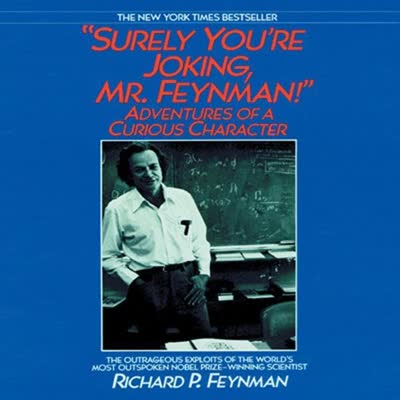
Surely You're Joking, Mr. Feynman!

South of the Border, West of the Sun

Kafka on the Shore

On Grand Strategy

Days at the Morisaki Bookshop

The Great Gatsby
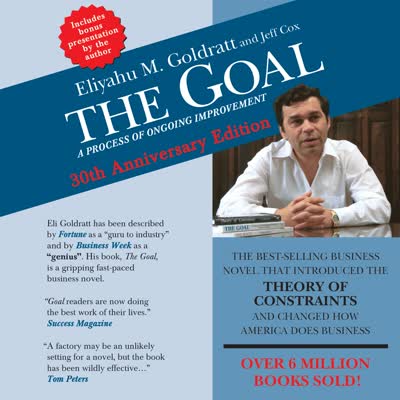
The Goal

A Sport and a Pastime

Stoner

7 Powers

Letters from a Stoic

Crime and Punishment

Nip the Buds, Shoot the Kids

The Unbearable Lightness of Being

The Stranger

East of Eden

Norwegian Wood

What I Talk About When I Talk About Running

Stories of Your Life and Others

Dune Messiah

Siddhartha

Dune

Dance Dance Dance

Sputnik Sweetheart
The Unbearable Lightness of Being
A Novel
GoodreadsLiterature & Fiction
My Notes (14)
"There is no means of testing which decision is better, because there is no basis for comparison. We live everything as it comes, without warning, like an actor going on cold. And what can life be worth if the first rehearsal for life is life itself? That is why life is always like a sketch. No, “sketch” is not quite the word, because a sketch is an outline of something, the groundwork for a picture, whereas the sketch that is our life is a sketch for nothing, an outline with no picture."
"""
We all need someone to look at us. We can be divided into four categories according to the kind of look we wish to live under.
The first category longs for the look of an infinite number of anonymous eyes, in other words, for the look of the public.
The second category is made up of people who have a vital need to be looked at by many known eyes. They are the tireless hosts of cocktail parties and dinners. They are happier than the people in the first category, who, when they lose their public, have the feeling that the lights have gone out in the room of their lives. This happens to nearly all of them sooner or later. People in the second category, on the other hand, can always come up with the eyes they need.
Then there is the third category, the category of people who need to be constantly before the eyes of the person they love. Their situation is as dangerous as the situation of people in the first category. One day, the eyes of their beloved will close, and the room will go dark.
And finally there is the fourth category, the rarest, the category of people who live in the imaginary eyes of those who are not present. They are the dreamers.
"""
"A person who longs to leave the place where he lives is an unhappy person"
"True human goodness, in all its purity and freedom, can come to the fore only when its recipient has no power. Mankind's true moral test, its fundamental test (which lies deeply buried from view), consists of its attitude towards those who are at its mercy."
"How can you suffer from the absence of a person who is present?"
"Yes, it was too late, and Sabina knew she would leave Paris, move on, and on again, because were she to die here they would cover her up with a stone, and in the mind of a woman for whom no place is home the thought of an end to all flight is unbearable"
"for there is nothing heavier than compassion. Not even one's own pain weighs so heavy as the pain one feels with someone, for someone, a pain intensified by the imagination and prolonged by a hundred echoes."
“People usually escape from their troubles into the future; they draw an imaginary line across the path of time, a line beyond which their current troubles will cease to exist.”
insofar as it is possible to divide people into categories, the surest criterion is the deep-seated desires that orient them to one or another lifelong activity.
Every Frenchman is different. But all actors the world over are similar—in Paris, Prague, or the back of beyond. An actor is someone who in early child-hood consents to exhibit himself for the rest of his life to an anonymous public. Without that basic consent, which has nothing to do with talent, which goes deeper than talent, no one can become an actor. Similarly, a doctor is someone who consents to spend his life involved with human bodies and all that they entail. That basic consent (and not talent or skill) enables him to enter the dissecting room during the first year of medical school and persevere for the requisite number of years.
“When a person is clubbed violently on the head, he collapses and stops breathing. Some day, he will stop breathing anyway. Murder simply hastens a bit what God will eventually see to on His own. ”
“Franz had studied in Paris, and because he was extraordinarily gifted his scholarly career was assured from the time he was twenty. At twenty, he knew he would live out his life within the confines of his university office, one or two libraries, and two or three lecture halls. The idea of such a life made him feel suffocated. He yearned to step out of his life the way one steps out of a house into the street.
And so as long as he lived in Paris, he took part in every possible demonstration. How nice it was to celebrate some-thing, demand something, protest against something; to be out in the open, to be with others. The parades filing down the Boulevard Saint-Germain or from the Place de la Republique to the Bastille fascinated him. He saw the marching, shouting crowd as the image of Europe and its history. Europe was the Grand March. The march from revolution to revolution, from struggle to struggle, ever onward.
I might put it another way: Franz felt his book life to be unreal. He yearned for real life, for the touch of people walking side by side with him, for their shouts. It never occurred to him that what he considered unreal (the work he did in the solitude of the office or library) was in fact his real life, whereas the parades he imagined to be reality were nothing but theater, dance, carnival—in other words, a dream.“
"How could he be so unsure of himself with her? She had not given him the slightest cause for worry! In fact, she was the one who had taken the initiative shortly after they met. He was a good-looking man; he was at the peak of his scholarly career; he was even feared by his colleagues for the arrogance and tenacity he displayed during professional meetings and colloquia. Then why did he worry daily that his mistress was about to leave him?
The only explanation I can suggest is that for Franz, love was not an extension of public life but its antithesis. It meant a longing to put himself at the mercy of his partner. He who gives himself up like a prisoner of war must give up his weap-ons as well. And deprived in advance of defense against a possi-ble blow, he cannot help wondering when the blow will fall."
“Muss es sein?” (“Must it be?”)
“Es muss sein!” (“It must be!”)
The phrase originally comes from Beethoven, who inscribed it on the manuscript of his last quartet (Op. 135). The story goes that Beethoven wrote it in response to a mundane situation- someone asking whether they had to pay a fee, but then elevated it into the final movement of the quartet, turning a trivial necessity into something that sounds like a grand, fateful declaration. Kundera uses this anecdote to explore one of the novel's central tensions: the relationship between weight and lightness, necessity and chance.
connects to the novel's broader engagement with Nietzsche's idea of eternal return. If life happens only once, every choice is unbearably light — it carries no weight because it can never be compared to an alternative. "Es muss sein" represents the human impulse to resist that lightness, to insist that certain things in life are heavy, necessary, and fated rather than random. Kundera asks whether that insistence is a beautiful illusion or a fundamental truth about how we experience love and commitment.
“In the sunset of dissolution, everything is illuminated by the aura of nostalgia, even the guillotine.”